
Tom Colcord
Solo Exhibition: The Fluidity of Perception
-or-
Being Both the Cause and Effect
November 15, 2025 – January 31, 2026
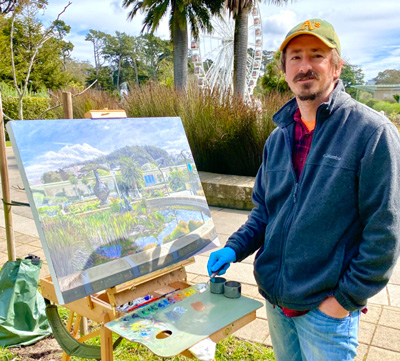
Tom Colcord is a painter and art educator living in San Francisco California. Originally from Indianapolis Indiana, Tom holds a BFA in Painting from Indiana University Bloomington and an MFA in studio art from the San Francisco Art Institute.
Working across multiple approaches—from large-scale surrealism to plein air painting—Colcord explores psychological landscapes that challenge our understanding of reality and place.
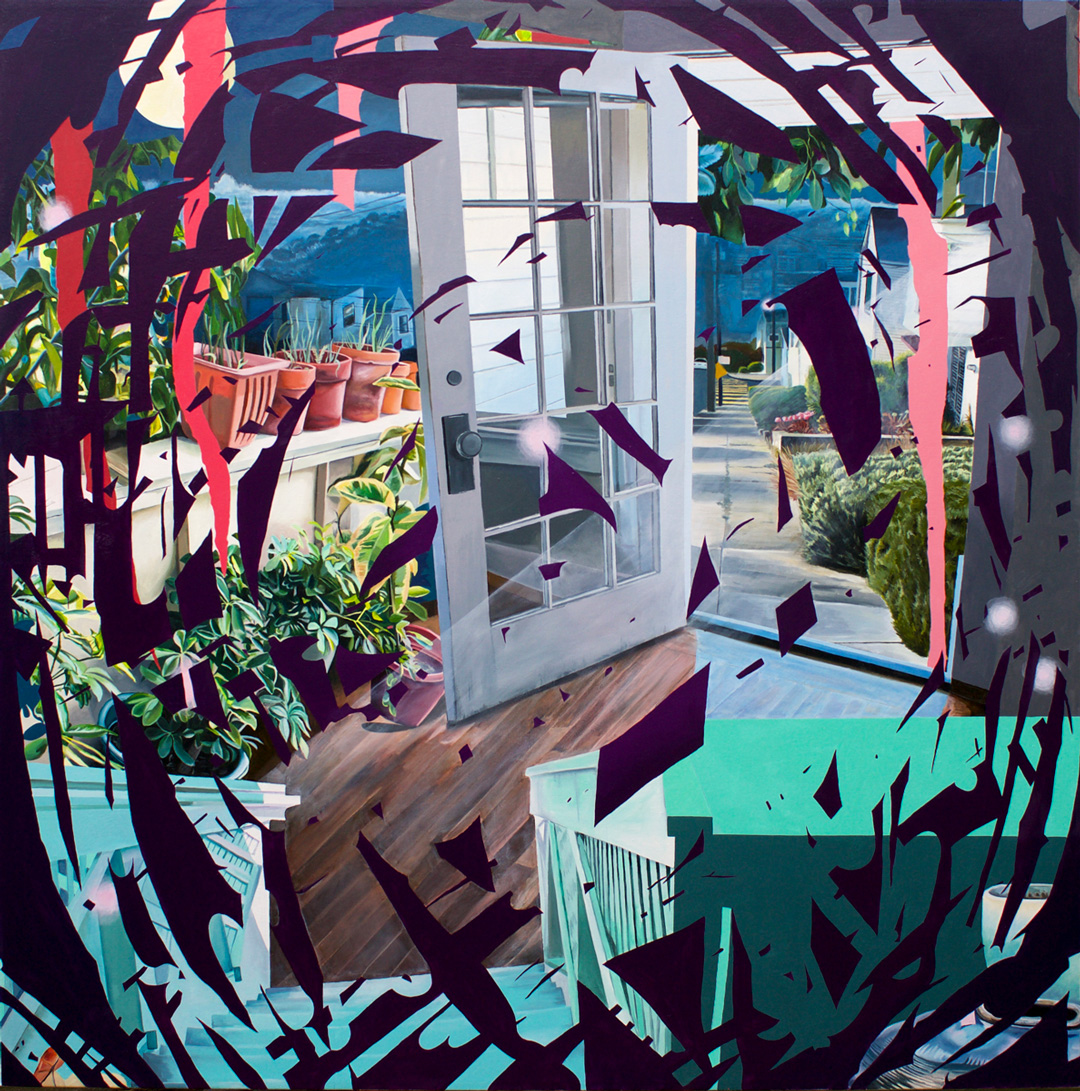
Tom Colcord – Greenhouse Effect – oil on canvas 72″ x 72″ $10,000
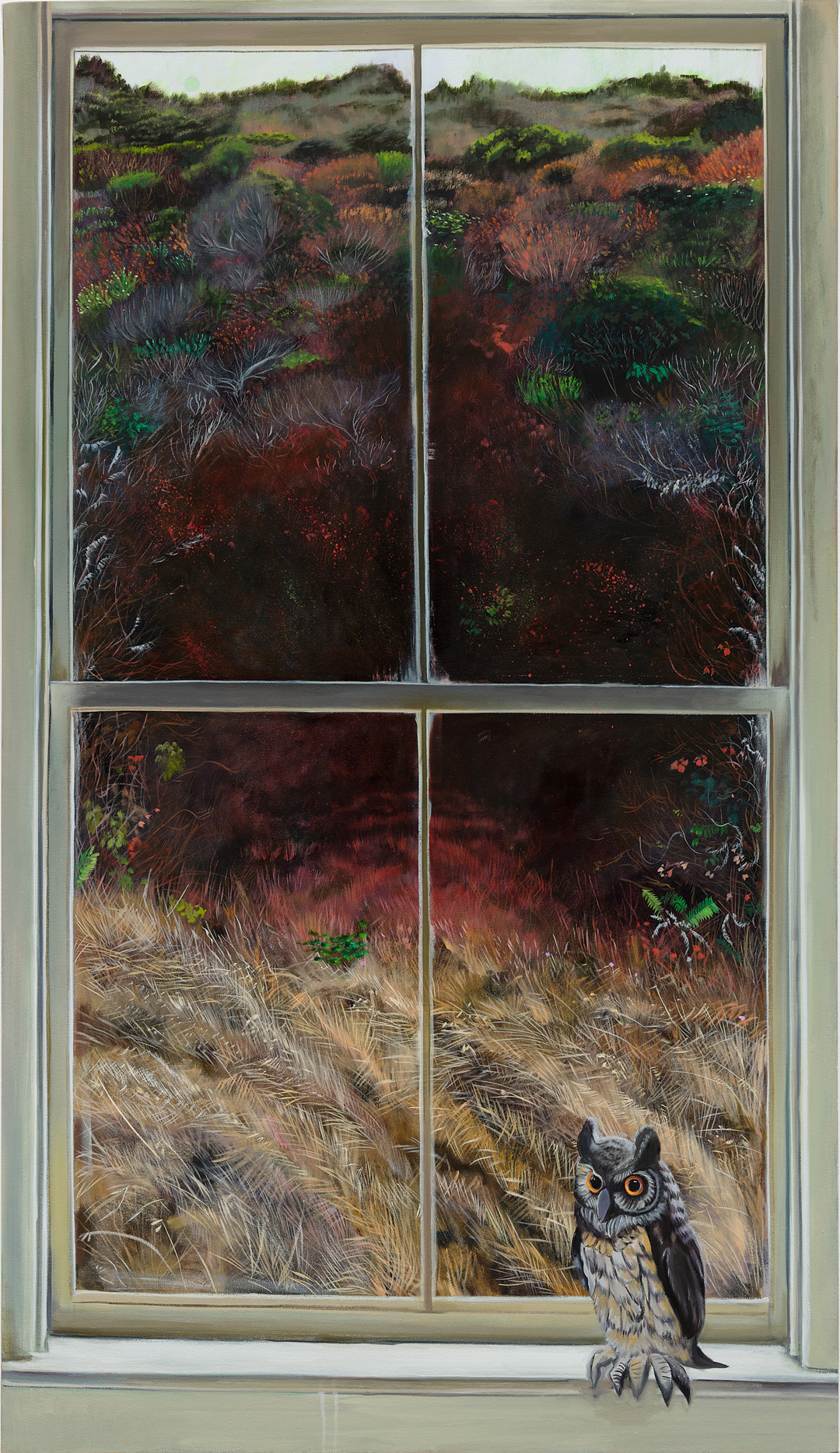
Tom Colcord – According to the Cosmic Owl – oil on canvas 60″ x 35″ $4500
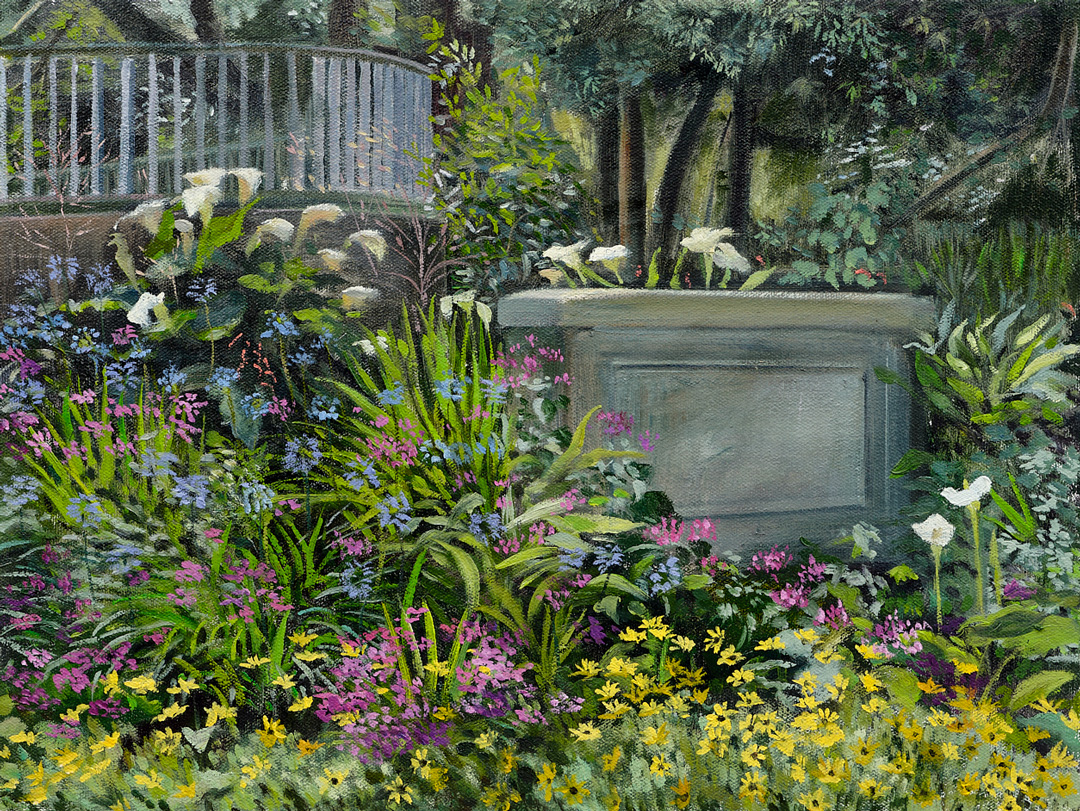
Tom Colcord – Botanical Altar – oil on canvas 12″ x 16″ $750
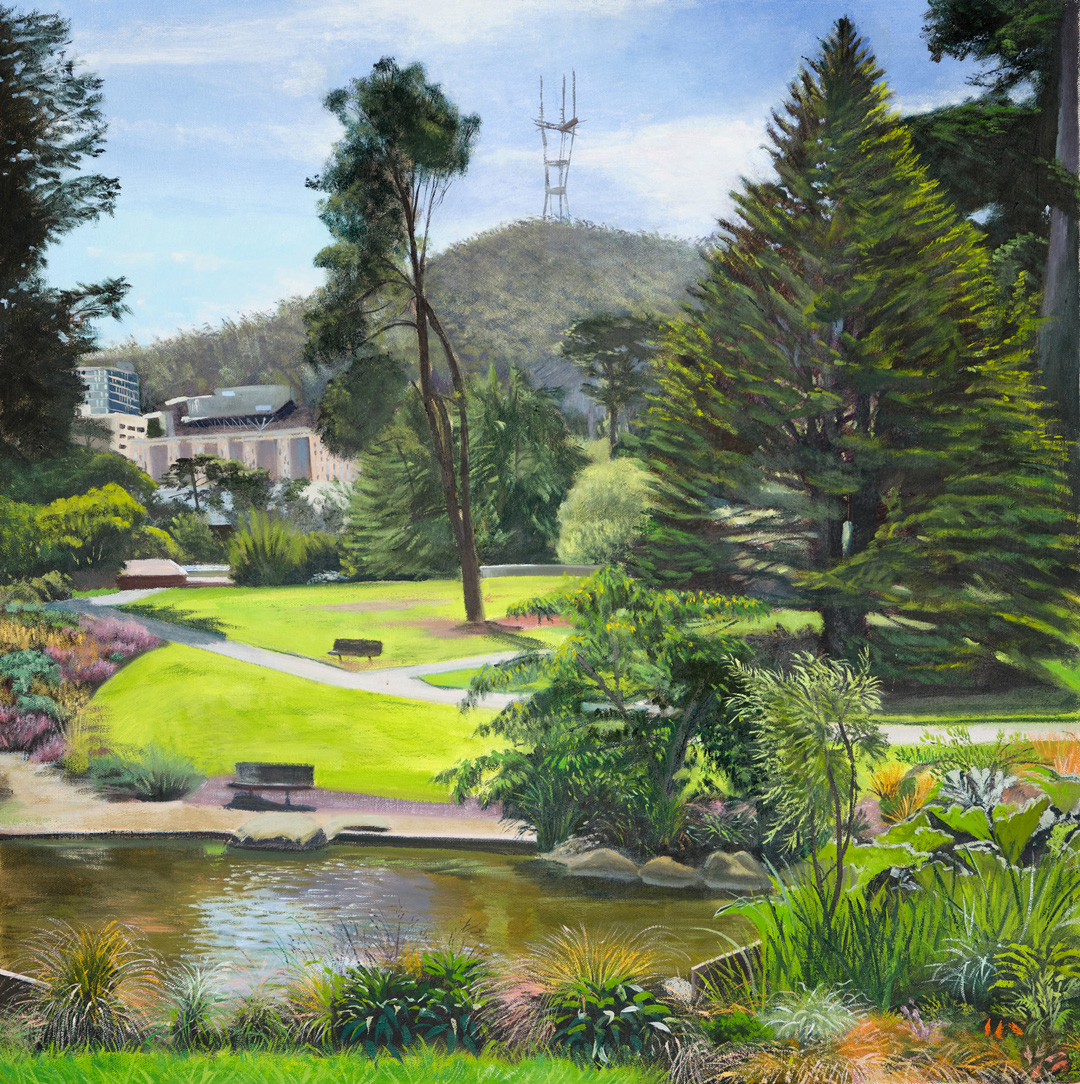
Tom Colcord – Botanical Gardens – oil on canvas 24″ x 24″ $3000
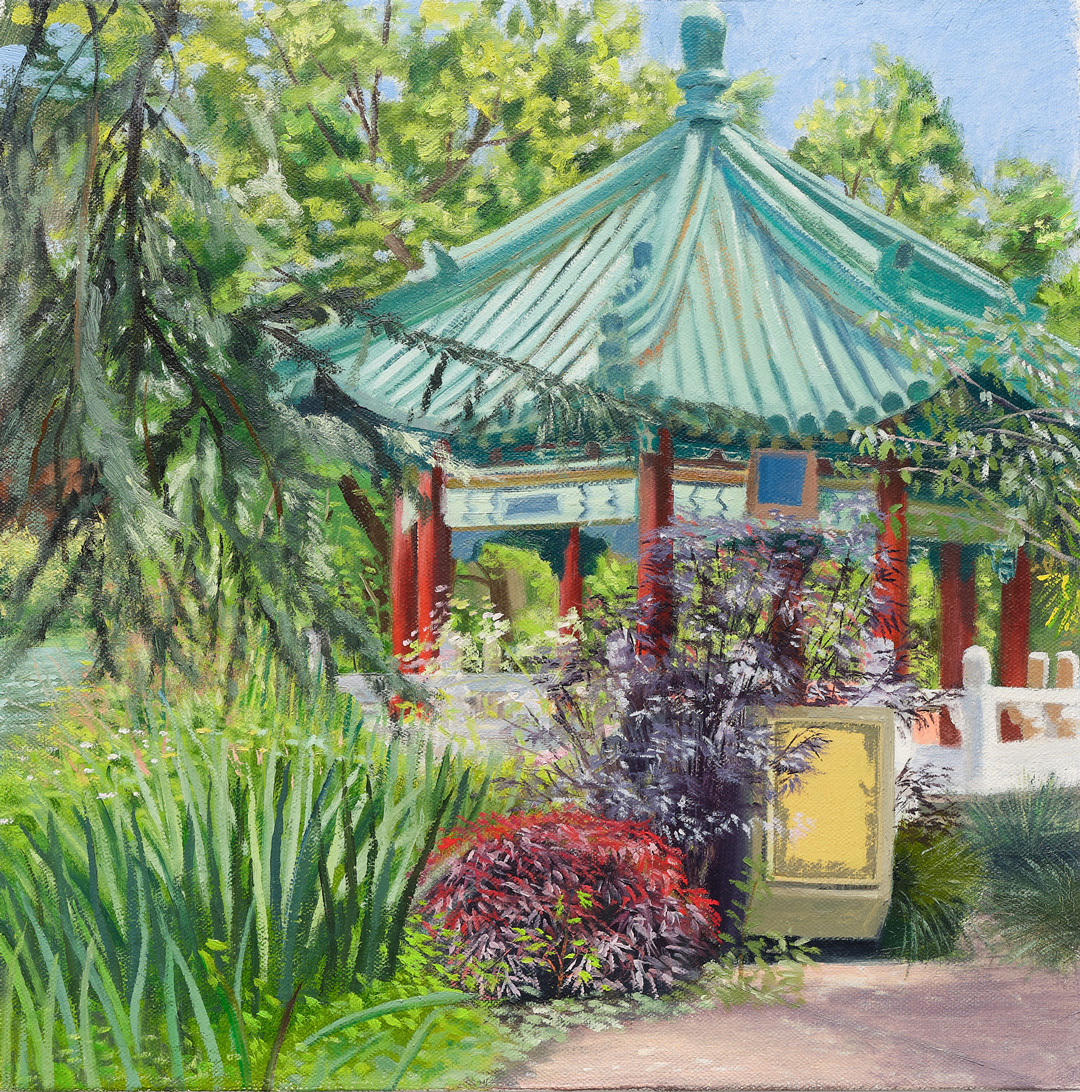
Tom Colcord – Chinese Pavilion – oil on canvas 12″ x 12″ $750
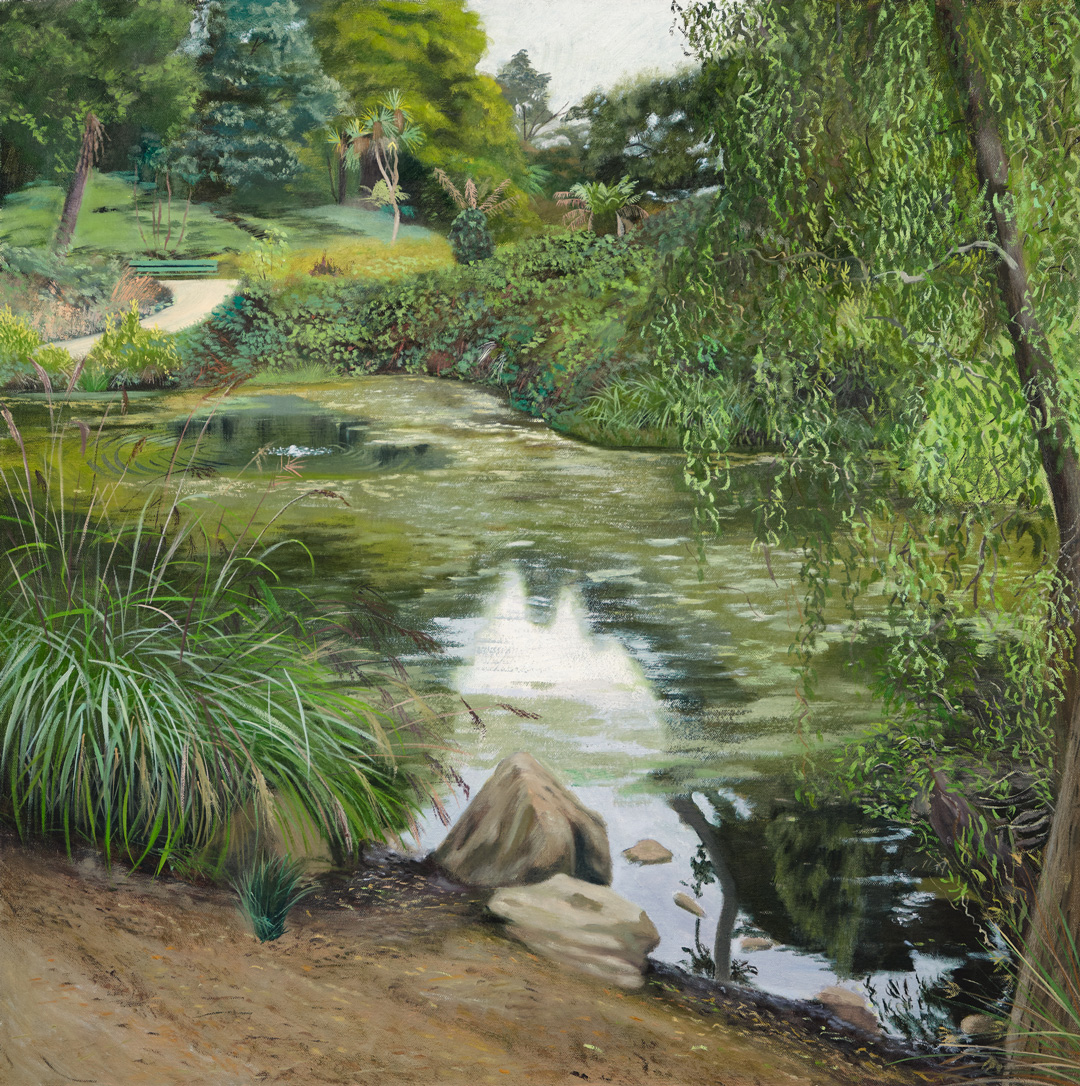
Tom Colcord – Fern Dell Mornings – oil on canvas 24″ x 24″ $3000
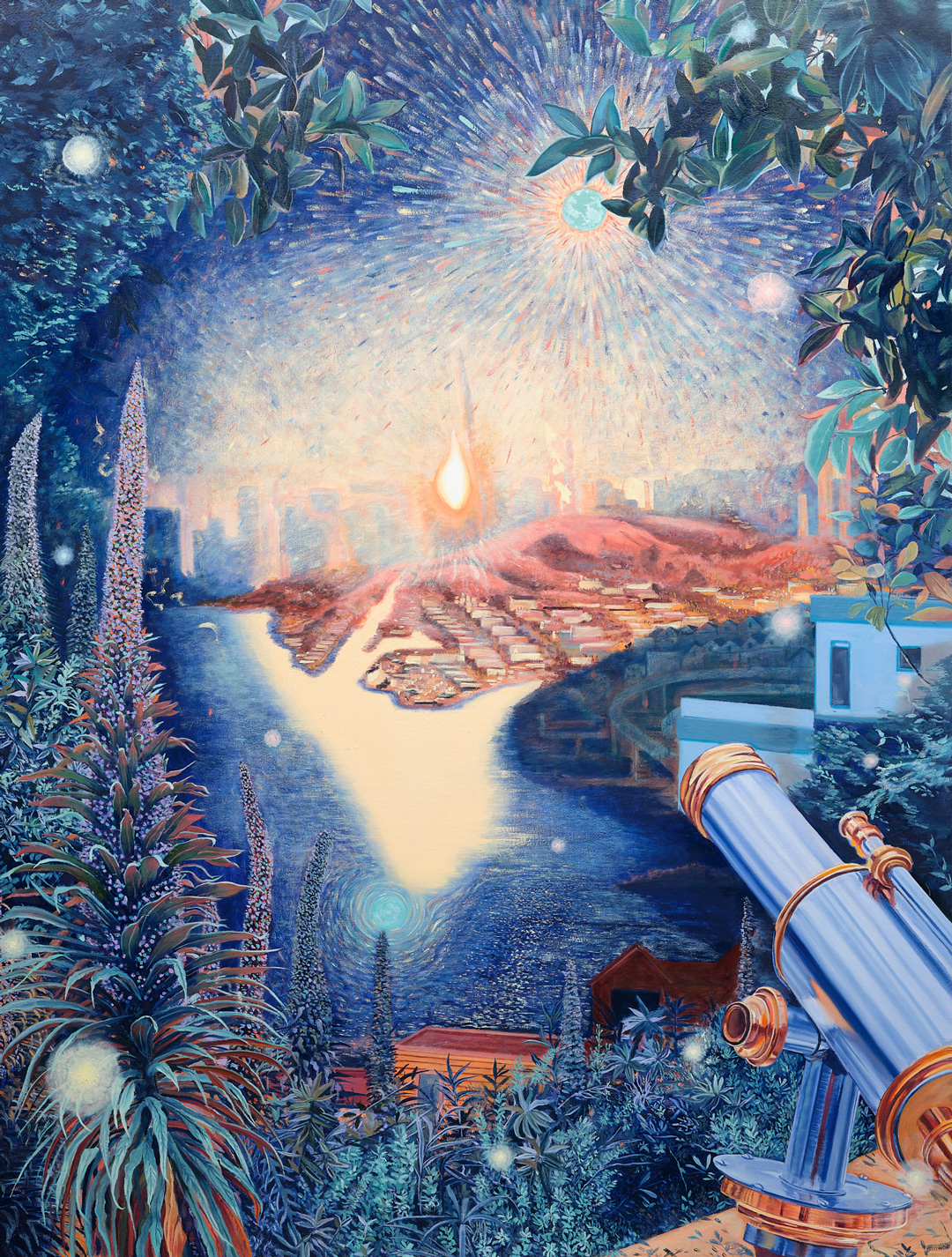
Tom Colcord – Foresight – oil on canvas 42″ x 32″ $4500
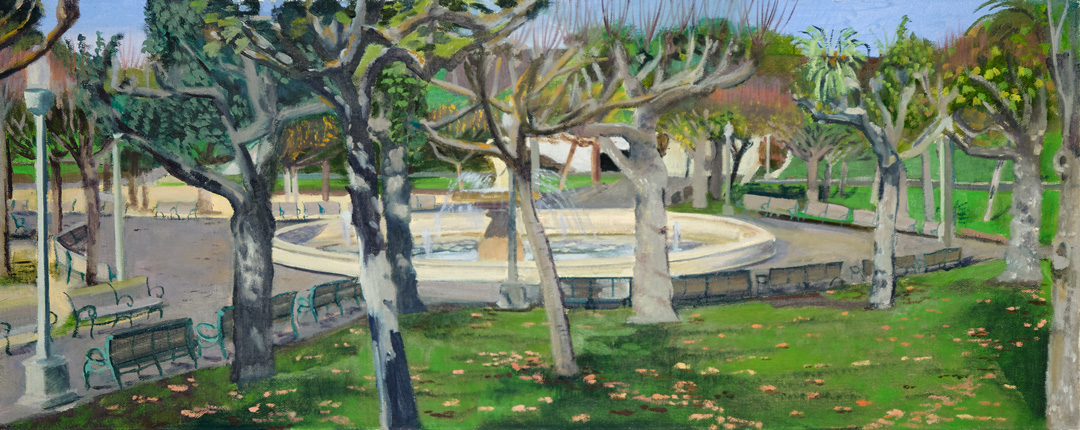
Tom Colcord – Fountain During Winter and Fall – oil on canvas 9″ x 24″ $1400 Framed
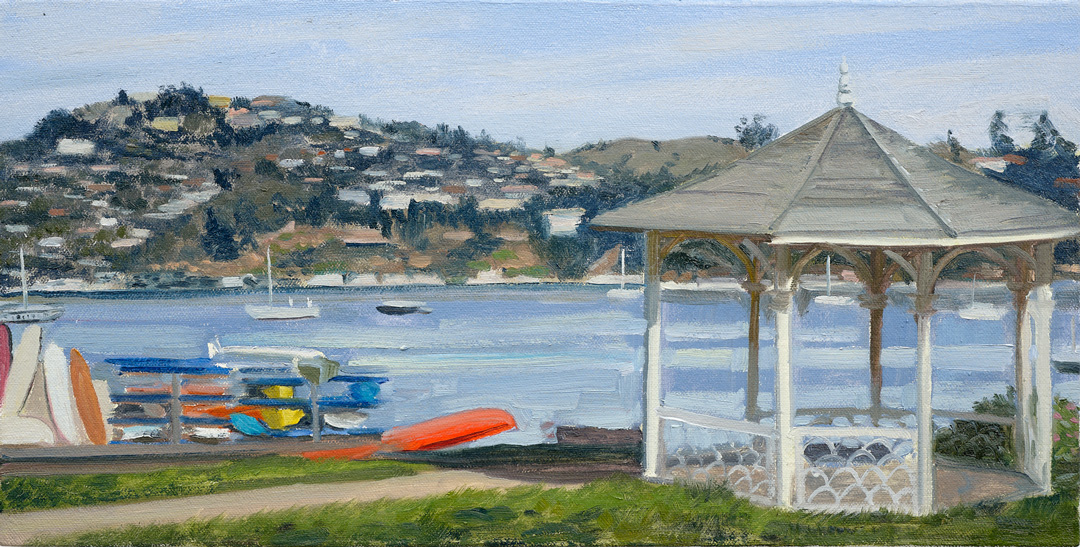
Tom Colcord – Gazebo by the Bay – oil on canvas 8″ x 16″ $500
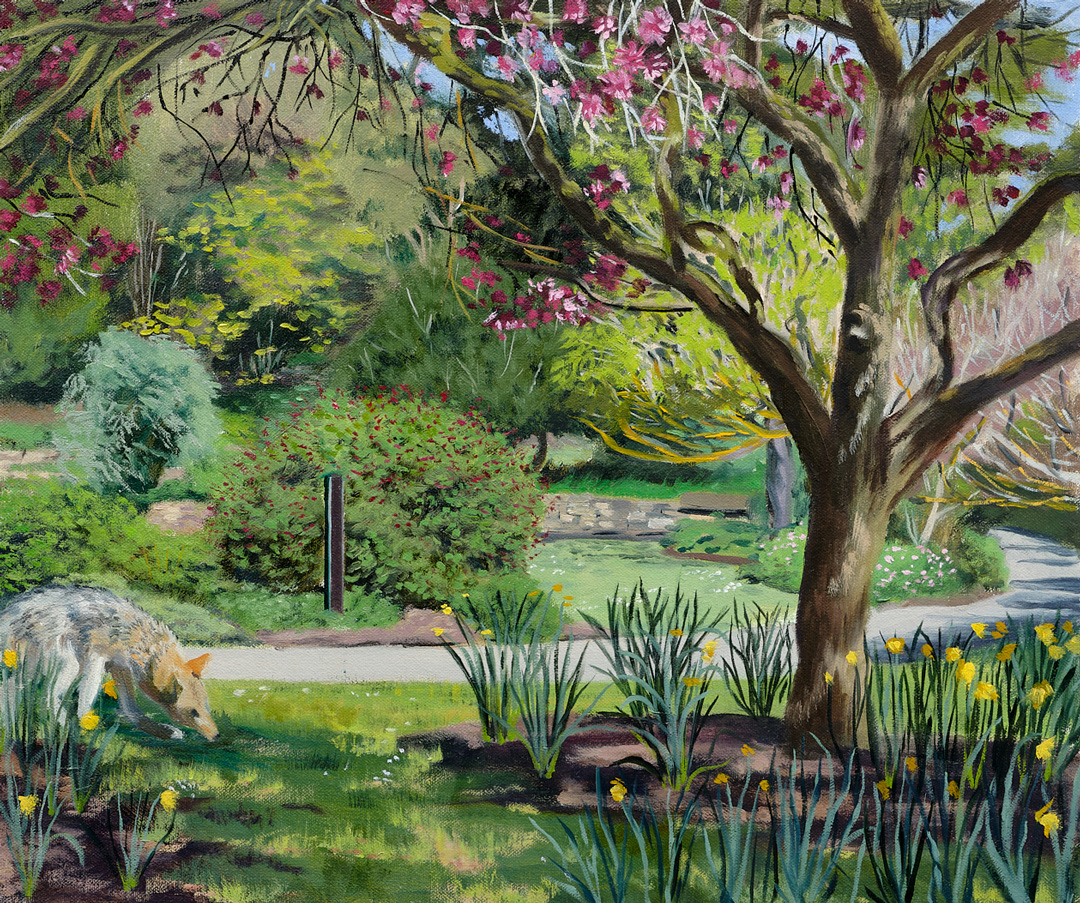
Tom Colcord – Garden of Fragrance – oil on canvas 14″ x 16″ $750
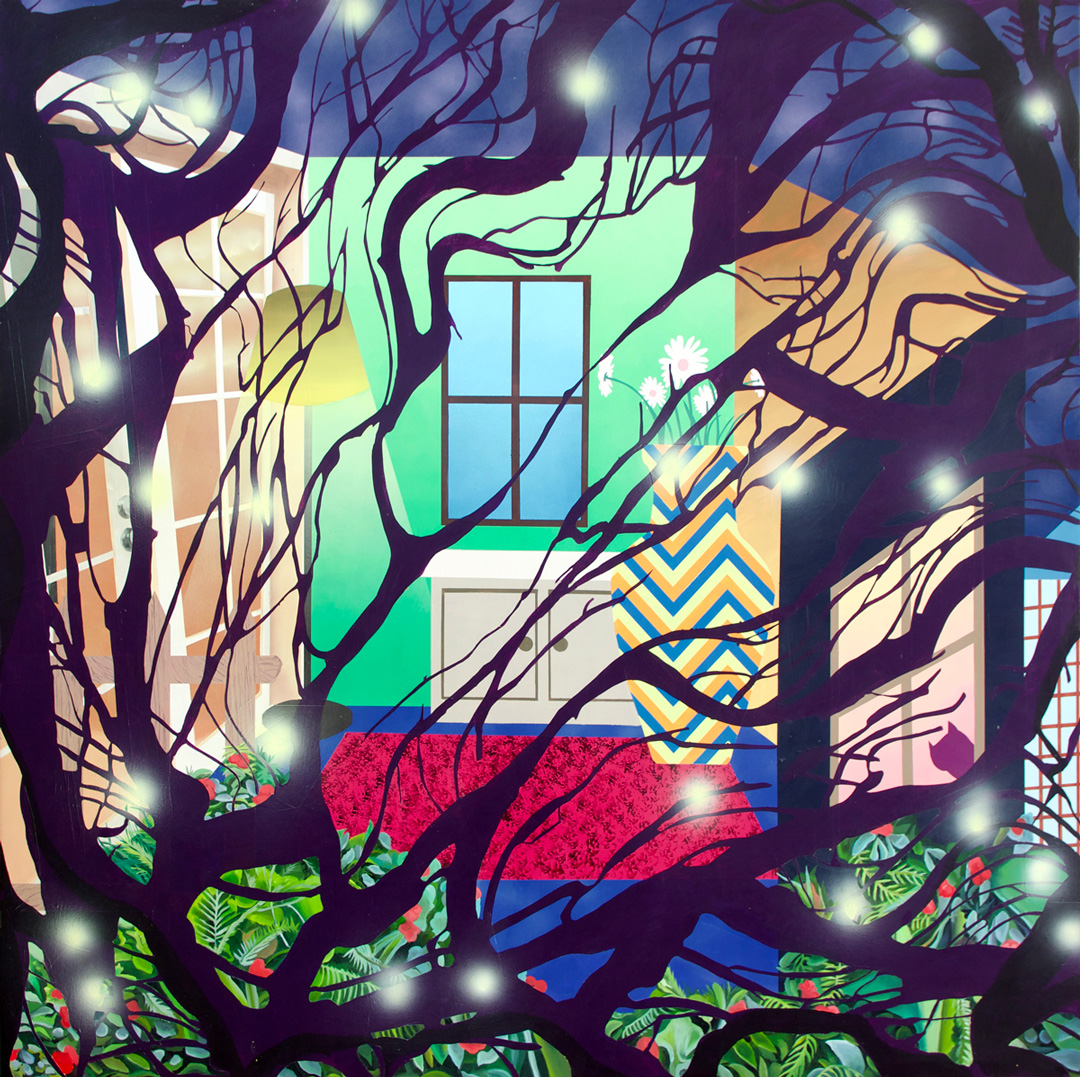
Tom Colcord – Gaslighting – oil on canvas 72″ x 72″ $10,000
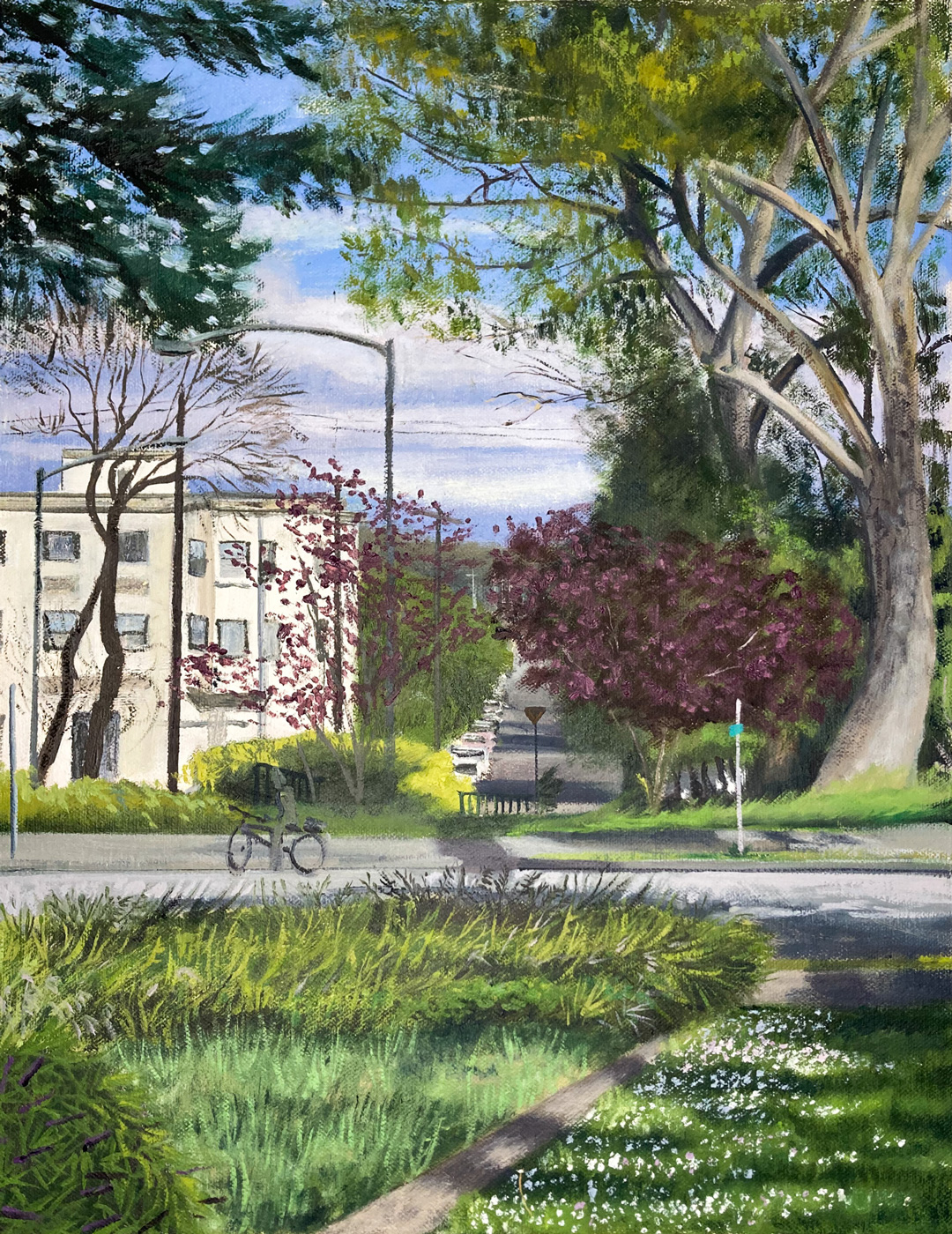
Tom Colcord – JFK to Richmond – oil on canvas 11″ x 14″ $650
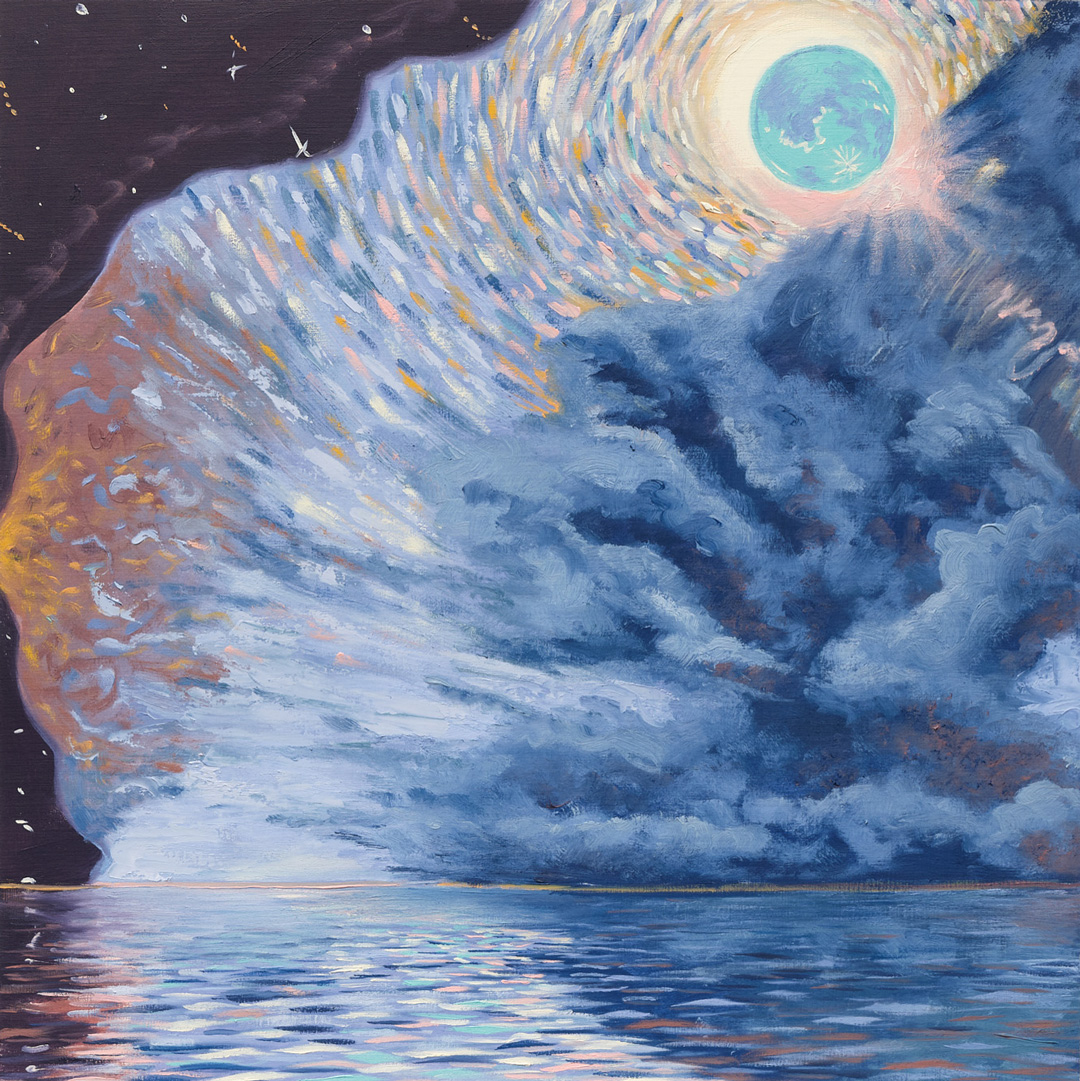
Tom Colcord – Moon Over the Water 2 – oil on canvas 17″ x 16″ $1000
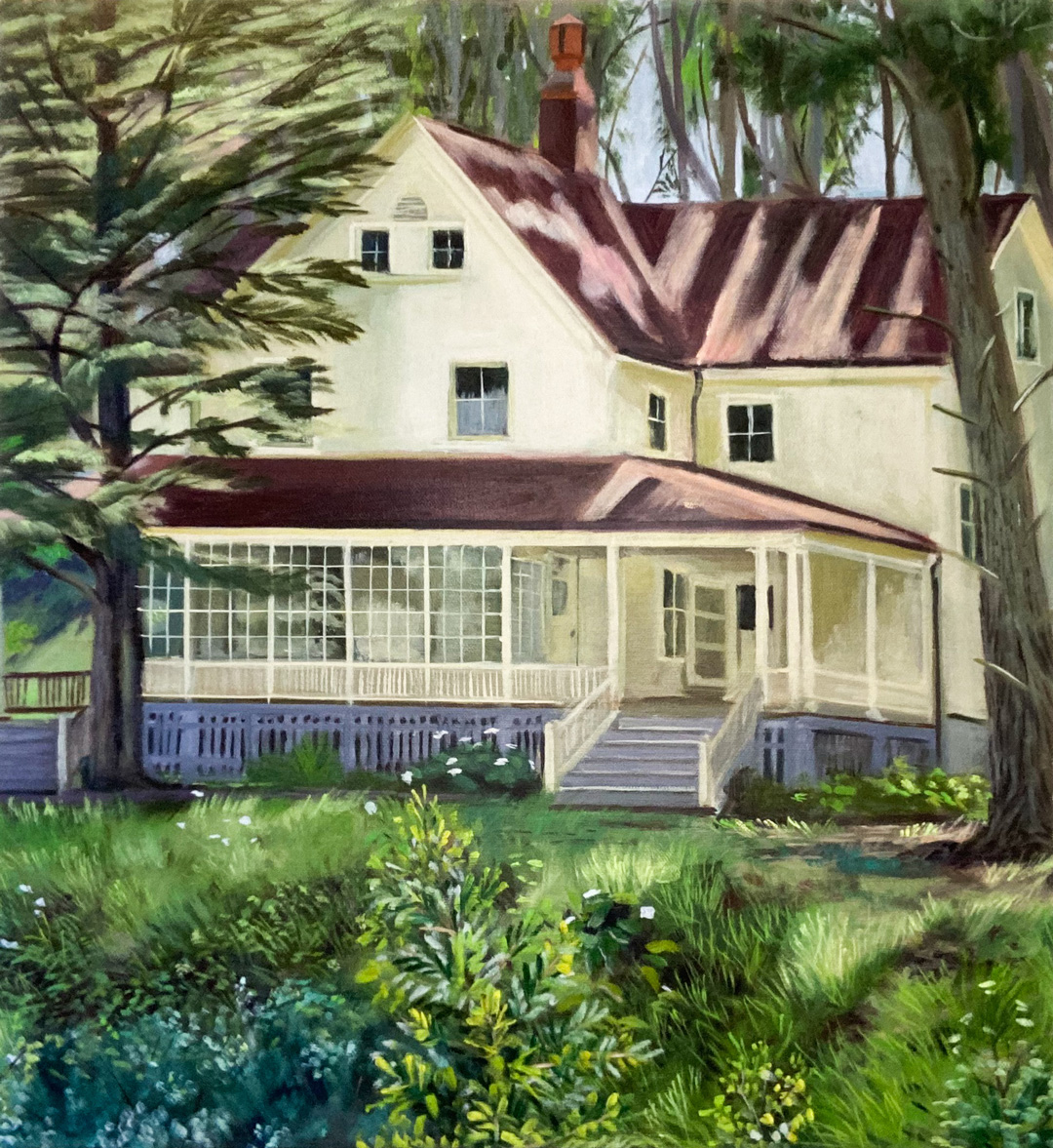
Tom Colcord – Morning at the Family House – oil on canvas 20″ x 18″ $1600
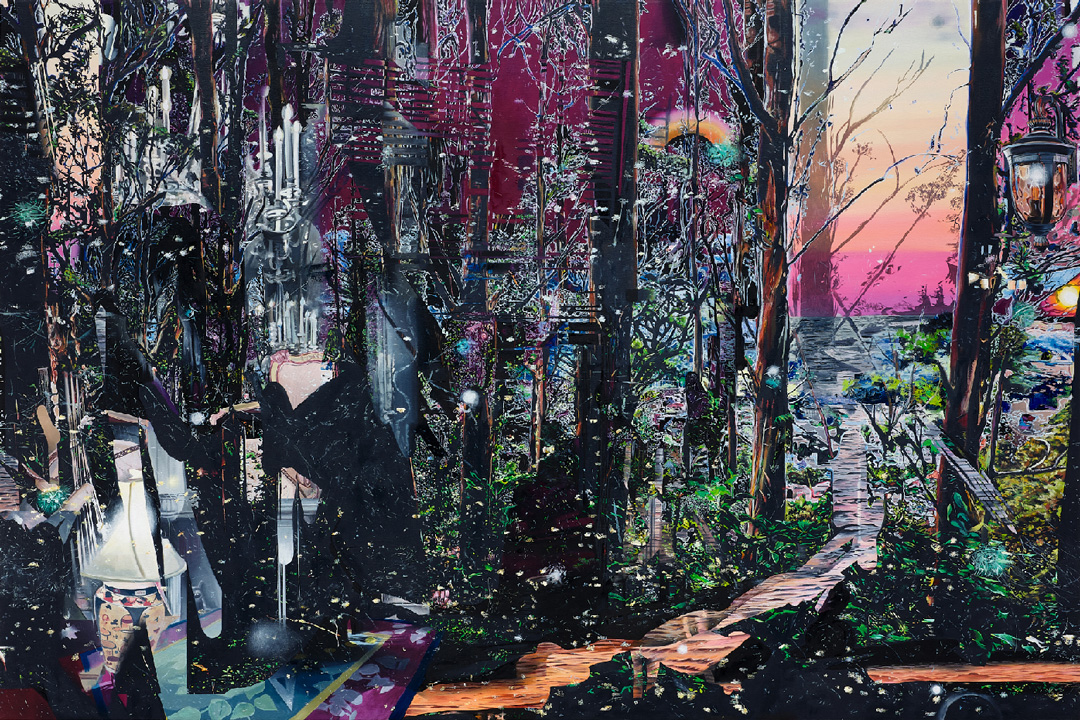
Tom Colcord – My Thoughts Are Not Mine – oil on canvas 48″ x 72″ $10,000
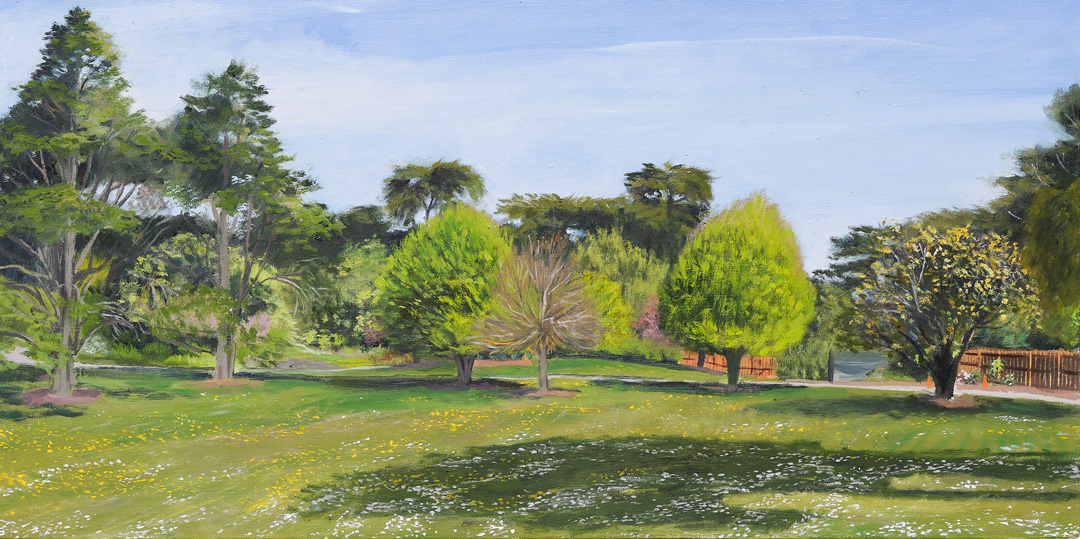
Tom Colcord – Open Field in the Botanical Gardens – oil on canvas 10″ x 20″ SOLD
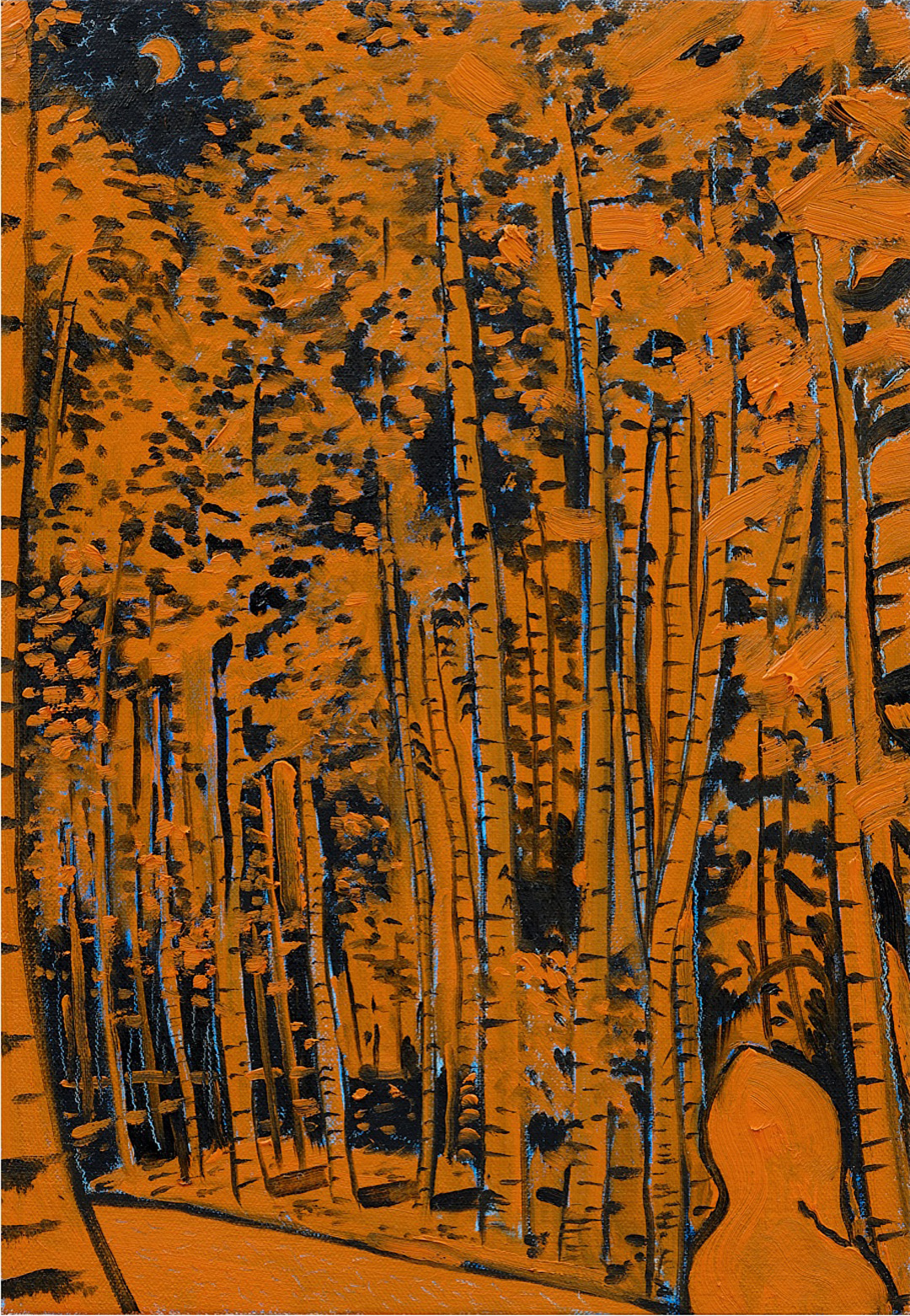
Tom Colcord – Picatrix Lessons I – oil on canvas 14″ x 9″ $500
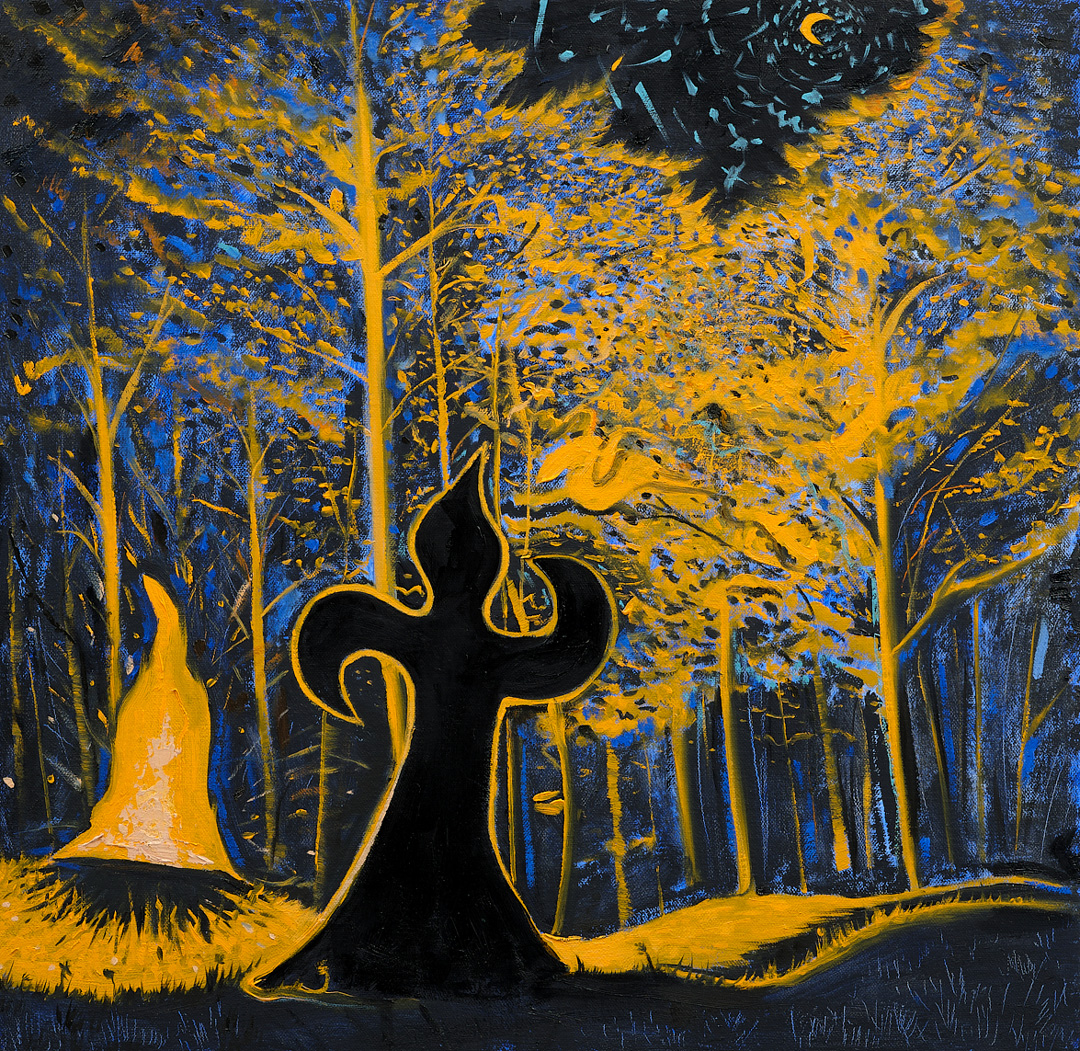
Tom Colcord – Picatrix Lessons III – oil on canvas 16″ x 16″ $750
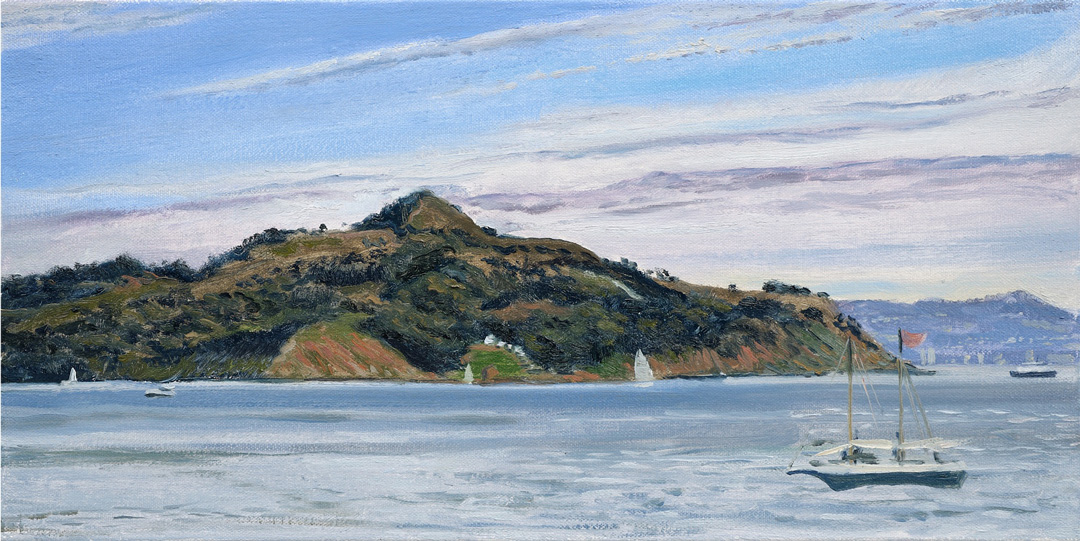
Tom Colcord – Belvedere – oil on canvas 8″ x 16″ SOLD
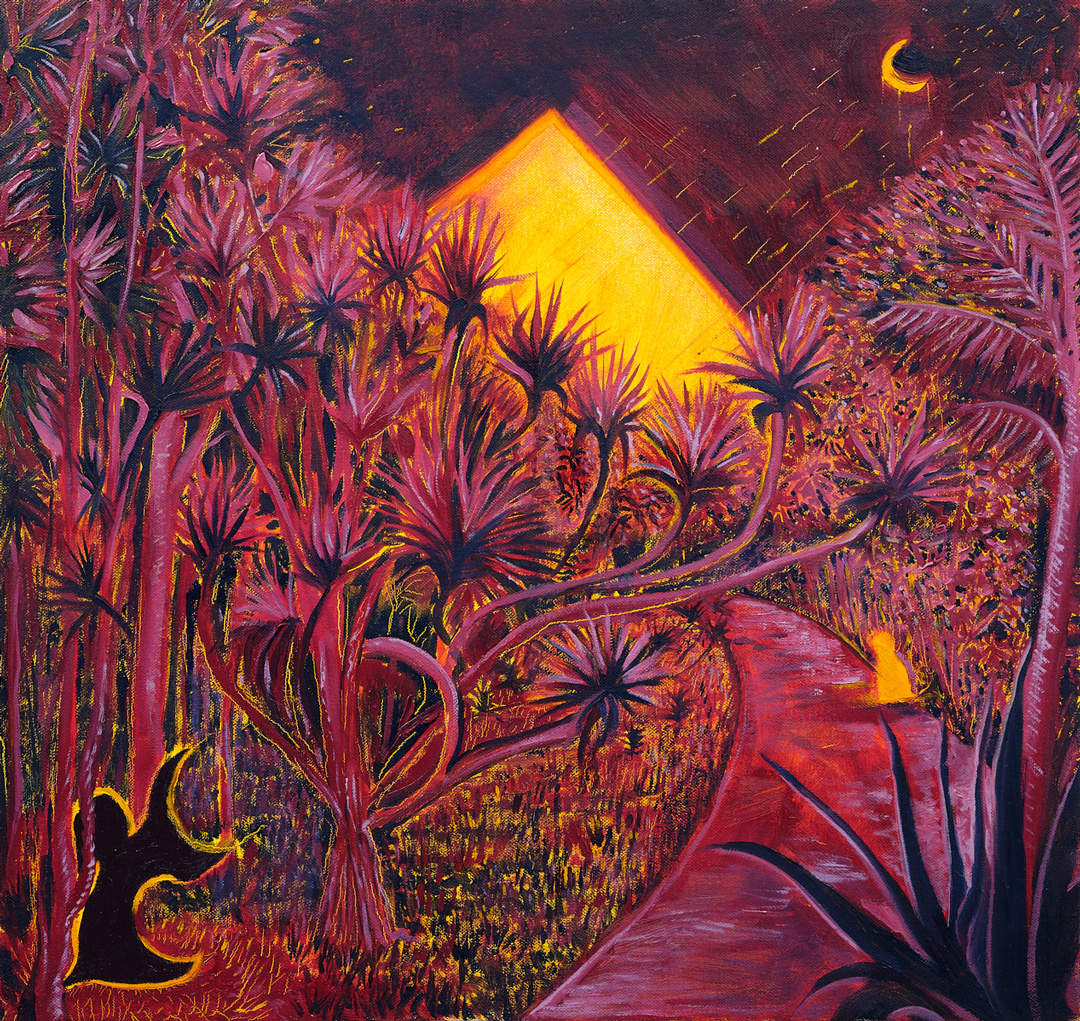
Tom Colcord – Picatrix Lessons IV – oil on canvas 16″ x 16″ $750
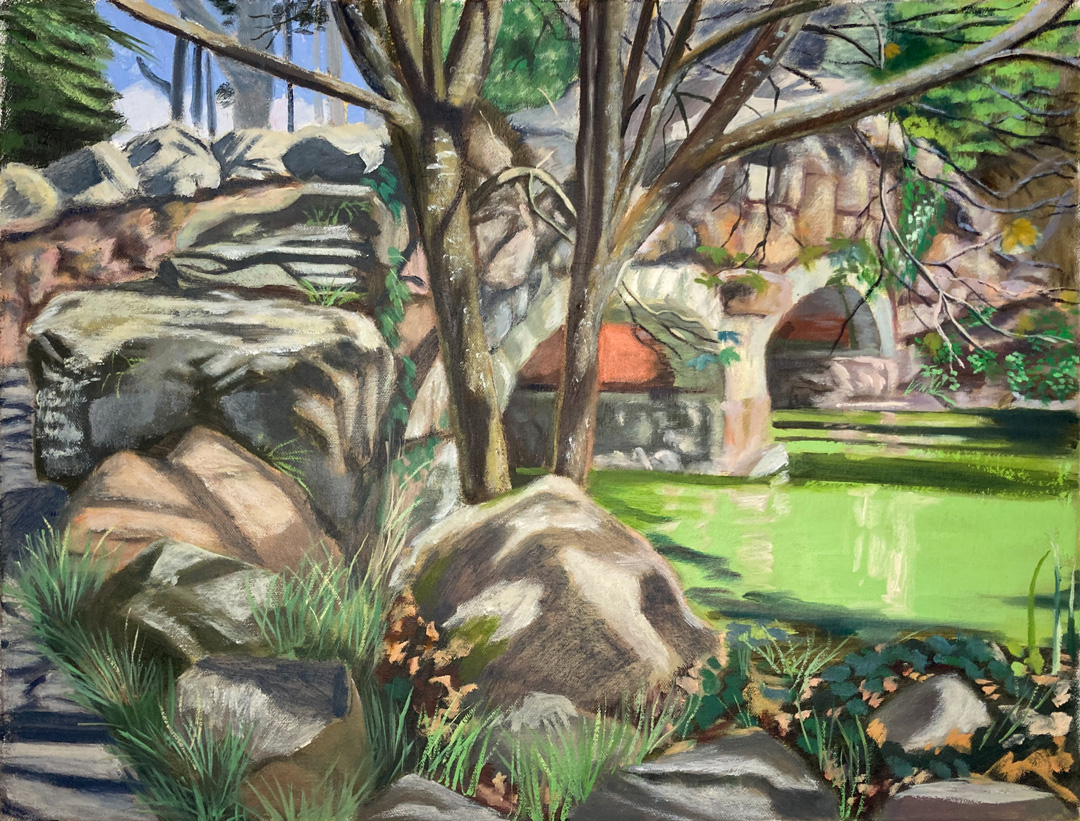
Tom Colcord – Stow Lake Bridge – oil on canvas 12″ x 16″ $1000
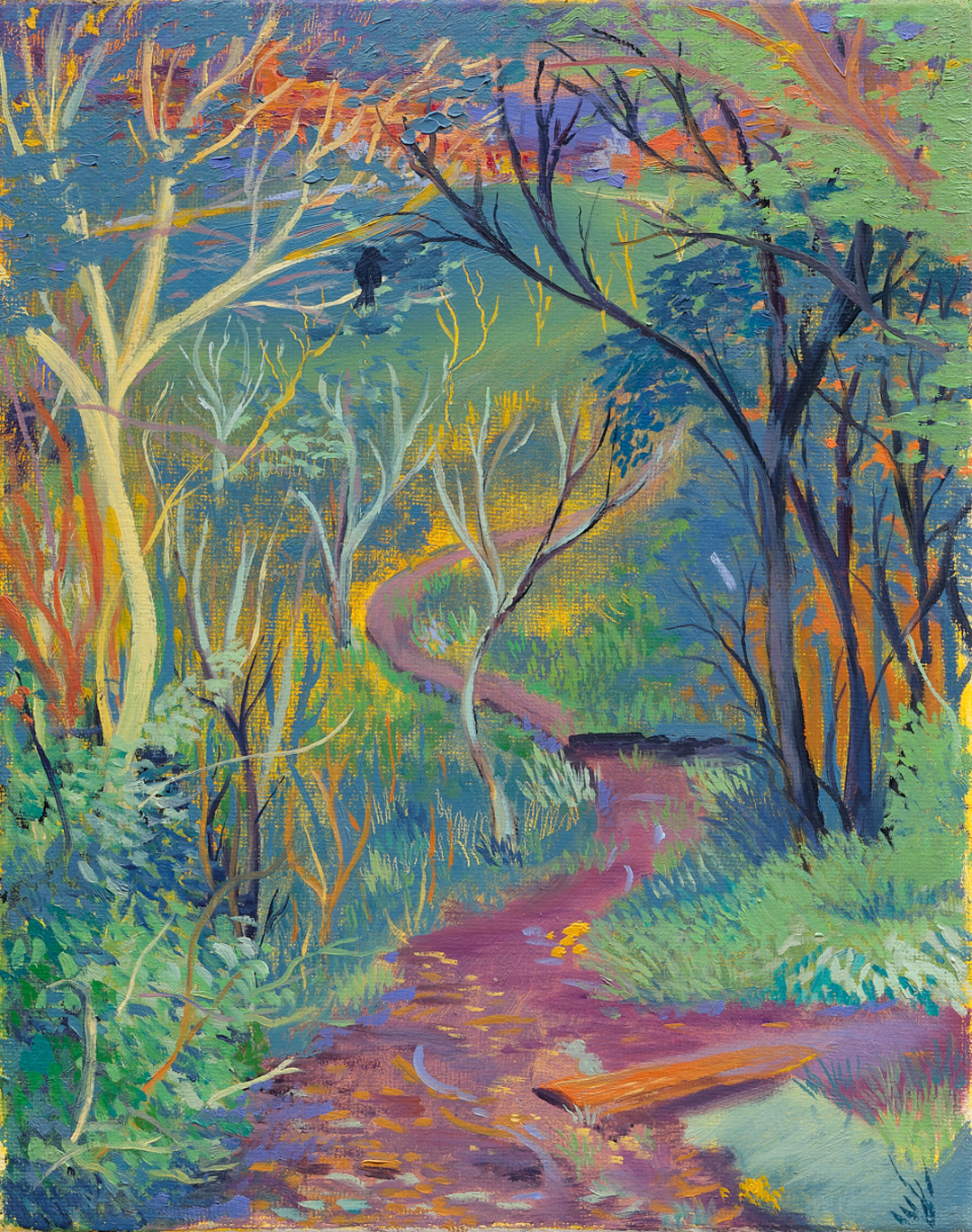
Tom Colcord – The Crow Path – oil on canvas 10″ x 8″ SOLD
ARTIST STATEMENT
“The Fluidity of Perception, or being both the cause and effect” at Avenue 12 Gallery
This exhibition explores what I call the “The Fluidity of Perception.”
Fluidity of Perception refers to a “Landscape of the Mind”: a psychological landscape that reflects the subjectivity of our perceptions. In order to create these paintings, I collage disparate landscape and interior elements to create a dreamlike space that is logical yet elusive. The result is a painting that features many landscape elements, but is ultimately a psychological space that feels as though it is in the midst of being edited. The landscape is the most appropriate mode of painting to depict the mind because it suggests vastness, fullness, and emptiness simultaneously. Ultimately the question I am exploring is: can I render how beliefs, memories, and ideas evolve? How can I capture, pictorially, the way my mind is putting together my reality?
In addition to the Fluidity of Perception, I spend ample time interpreting the landscape En Plein Air. Plein Air refers to painting the landscape directly on location, without the mediation of photographs or references. It is fleeting, and often done with urgency to accommodate changing light and weather. Plein Air is both a work of passion and historical fascination for me, and, I believe, an in-depth investigation into the study of perception. After years of taking this approach, it has rewarded me with a greater understanding of how I see.
Exploring these two bodies of work together has allowed me the space to ponder perception from both an interior and exterior place. It is my understanding that “real” life is utilized in the mind as the raw basis that constitutes reality, yet what is filtered by the mind influences what is seen. In my case, and in the context of this exhibition, the Plein Air observations are the clay used to sculpt the way I experience reality, and ultimately provide a pictorial basis for how to structure the imagined/psychological landscape. These landscapes of the mind constitute my experience of reality, and influences what I look for the next time I am out in the open-air landscape.
This cause-and-effect scenario is a cycle. Proof that we are not casual or objective observers of the universe, but a part of reality itself.
BIO
Tom Colcord is a painter and art educator living in San Francisco California. Originally from Indianapolis Indiana, Tom holds a BFA in Painting from Indiana University Bloomington and an MFA in studio art from the San Francisco Art Institute.
Working across multiple approaches—from large-scale surrealism to plein air painting—Colcord explores psychological landscapes that challenge our understanding of reality and place.
Tom currently works as the Bay Area Representative for Dixon Ticonderoga and Strathmore paper, and teaches at Artworks fine art studio in San Francisco. He was the 2021-22 recipient of the Tournesol Award at the Headlands Center for the Arts. Most days, he can be found painting En Plein Air.
CV
Tom Colcord
Born: 1990 Indianapolis IN
Education: 2017 MFA San Francisco Art Institute (SFAI) 2013 BFA Indiana University Bloomington
Selected Exhibitions
2025
“The Fluidity of Perception” Solo Exhibition, Avenue 12 Gallery, San Francisco CA
“Love All” Group Exhibition, Glass Rice Gallery, San Francisco CA “Inaugural Karl Exhibition 2025” Group Show, Karl Art Gallery Levi’s Plaza, San Francisco CA “Botanica” Group Show, Hunt and Gather Gallery, San Francisco CA
“Left Coast Annual” Group Show, Sanchez Art Center, Pacifica CA
2024
“Home” Group Show, The Drawing Room SF, San Francisco CA
“Nature Vs. Machine” Group Show, Gallery-O-Rama, San Francisco CA “Made in California” Group Show, Brea Gallery, Brea CA
“Spring Exhibition” Group Show, Hunt and Gather, San Francisco CA “Artspan50th Anniversary” Group Show, GCS Agency, San Francisco CA “Showstopper Series” Group Show, 2358 Market Gallery, San Francisco CA
2023
“Inside Outside and Everything in Between” Solo Show, Glass Rice Gallery, San Francisco CA “Vantage: A Landscape Group Exhibition” Group Show, Good Mother Gallery, Los Angeles CA “Managers Special” Group Show, Mini Mart, San Francisco CA
“Small Works Exhibition” Group Show, Soft Times Gallery, San Francisco CA “Refuses of the Bay” Group Show, Voss Gallery, San Francisco CA
2022
“The Maximalist” Solo Show, Tournesol Award Exhibition, Headlands Center for the Arts, Sausalito CA “Small Works Exhibition” Group Show, Soft Times Gallery, San Francisco CA
2021
“Botany of Desire”, Group Show, Palate Gallery, San Francisco CA
”Seeing the Forest for the Trees”, Solo Show, Glass Rice Gallery, San Francisco CA
2020
The DeYoung Open, Group Show, The DeYoung Museum, San Francisco CA “Alternative Renderings”, Two Person Show with Tim Irani, Glass Rice Gallery, San Francisco CA “Basel: Bay Area Art Seekers Lounge”, Group Show, Voss Gallery, San Francisco CA
2019
“Monster Mash-Up”, Group Show, Glass Rice Gallery, San Francisco CA
”Wabash International Artist Residency”, Group Show, Honeywell Center, Wabash IN “Reality Under Construction”, Group Show, The Collective Gallery, Denver CO
2018
“Endless Winter”, Group Show, Glass Rice Gallery, San Francisco CA “Diagonal”, Group Show, Shotwell Gallery, San Francisco CA
”Its’s A Sign!”, Group Show, Ian Stallings Design, San Francisco CA “Spectrum”, Solo Show, Glass Rice Gallery, San Francisco CA
2017
“Clyde and Co. Art Awards Exhibition Show” (Group Show) Hang Art Gallery, San Francisco CA “Thesis Exhibition” (Solo Show), The San Francisco Mint, San Francisco CA
Collections
The De Young Museum, “Gentrification of the Dead” Fidelity Investments, “Familiars in Mind”
Honors/Awards/Residencies
Tournesol Award Recipient, Headlands Center for the Arts 2021-2022
Facebook Open Arts, Burlingame CA, 2021
Honorable Mention, “Into the Woods” at Basel Group Show, Voss Gallery SF 2020 Wabash International Artist Residency, Delphi IN 2019 ArtPoint Artist in Residence, San Francisco CA 2019
Peoples Choice Award, Clyde and Co. LLP Community Art Awards, San Francisco CA 2017
Outstanding Graduate Student Award, San Francisco Art Institute, San Francisco, CA 2017 SFAI Graduate Fellowship Award, San Francisco Art Institute, San Francisco, CA 2016
Ilkner P Ralston Award, NSAL Competition, John Waldron Arts Center, Bloomington IN 2015 The Art Students League of New York, Residency at Vytlacil, Sparkhill NY USA 2015
Ruth Katzman Scholarship, The Art Students League Residency at Vytlacil, NY 2015 Pygmalions Art Supplies Color Contest Winner, Bloomington, IN 2013
Teaching and Art Related Work Experience
Artworks – Instructor May 2022 – Now
Strathmore Paper and Dixon Ticonderoga – All California Representative, May 2018 – Now
Gamblin Artist Colors – Bay Area Representative, May 2017 – May 2020
Drawn2Art – Instructor, Los Altos, CA 2017 – 2021
City Studio Program – Art Teacher, Boys and Girls Clubs of America, Columbia Park, San Francisco, CA Summer 2018 – 2021
City College of San Francisco City Extension – Art Instructor 2023 – Now
Review by Max Blue
The Eternal Sunshine of a Cluttered Mind
Published by San Francisco Weekly
September 16, 2021
By Max Blue
The Japanese poet Basho once wrote that “the journey itself is home,” meaning that one’s destination is not some terminal point but wherever we find ourselves, both physically and metaphysically. San Francisco-based painter Tom Colcord explores these themes of subjectivity and transition in decadent Surrealist landscapes, which offer viewers a meditative space to contemplate contemporary life.
In 2021 he won the Tournesol Award, a prestigious fellowship at the Headlands Center for the Arts in Marin. “It was like a magic spell was sparked and everything fell into place,” he says.
The Tournesol Award, given once a year, grants one local painter a private studio at the center, along with a hefty stipend, chef-prepared meals, and all the perks of communing with fellow residents. The residency is ideal for a landscape painter: Tucked away in the Marin Headlands, the center occupies a cluster of decommissioned military barracks and other buildings at the edge of the continent, where views from the studios overlook fog shrouded hilltops dotted with eucalyptus trees and low-lying shrubs.
I visited Colcord at the center on an overcast afternoon in August, perfect for sitting around discussing his work and influences, which range from literature to animated films to jazz. The 850-square-foot studio felt like an explosion of creative energy, full of finished paintings and blank canvases, racks of materials, and enough chairs to host a small artist’s salon. The cavernous, whitewashed ceilings and multi-paned windows brought a calm, airy feeling to the space. Colcord opened the door onto the fire escape on his side of the building to show me the scene he’s been working from. Residents aren’t allowed onto the rusted platform, so Colcord positions an easel in the doorway to paint the landscape.
LANDSCAPES TO DREAMSCAPES
A native of Indianapolis, Colcord was trained in figurative painting at University of Indiana Bloomington. Students were encouraged to work strictly from life. “It was frowned upon to work from references,” Colcord says, meaning that using photographs was considered a form of cheating and you earned your stripes by getting your boots muddy. When you’re painting a landscape, it becomes “a conversation between you and the thing you’re observing. There’s something primordial about it.”
Colcord came to San Francisco for graduate school, earning an MFA at the San Francisco Art Institute in 2017, where his work began to develop conceptually. While he still regularly works from life, Colcord also has found a way to use reference photos that is deeply rooted in the themes of perception his work explores. He now has two main bodies of work: landscape paintings which he makes from life, and paintings he copies from laboriously collaged Photoshop images. The copies of the digital collages deal with the fluidity of perception, in which several elements collide and overlap; the landscape paintings explore the immediately perceivable limits of perception. “In all my work, I’m talking about how our perceptions are subjective,” Colcord says. “And [a painting] does that really well, because it’s a still, visual square that forces you to confront that one thing.”
The collaged paintings are dreamy visions of the unconscious, offering the viewer space to meditate on the content and whatever associations might come up for them; the landscapes offer so much visual density that they act almost like mantras, exercises in repetition counterintuitively producing clarity. “I don’t think of myself as an abstract painter,” he says, “but as someone who is interested in painting about abstract ideas.”
Colcord has been called a “Millennial Impressionist painter,” self-identifies as a Maximalist, and is also something of a Surrealist. Maximalism, as an aesthetic of excess, was developed as a reaction to Minimalism in the 1960s and leaned on the conviction that “more is more” as opposed to the Minimalist notion “less is more.” The contemporary cultural moment, however, is defined by an abundance of information, from the sensory overload of city living to the relentless onslaught of images and information coming from our smartphones. “I think it’s part of the Millennial experience,” Colcord, 31, says. “I’m overwhelmed all the time.”
The logical aesthetic response to this inundation might be a return to Minimalism. Instead, Colcord sees Maximalism as the necessary approach to exploring this experience, forcing him to slow down in his laborious reproduction of the oversaturated world. “There’s so much going on already and so many things to think about, and I don’t necessarily think that’s a natural way to live. I’m attracted to stopping and looking.” With density being the unifying aesthetic across his multiple bodies of work, painting offers Colcord the opportunity to process his experience and give others the space to do the same.
There’s no question life is overwhelming, a constant state of stimulation only exacerbated by the constant feed of information that can paralyze the human mind, which copes by generalizing. A pertinent scientific example: we don’t actually see every single leaf on a tree when we look at it; our brain fills in a general referent based on prior experiences and expectations. … Colcord seems to see not only every tree, but every leaf, using the density of the natural world to counter the sensory overload of urban and technologized life, harnessing the chaos to create clarity.
Like the best remix of a musical track, Colcord’s remix of visual motifs juxtaposes the selections in a way that simultaneously calls attention to each element while producing a result greater than the sum of its parts, working as an externalization of the subconscious experience we overlay onto the visually perceivable world. It’s also a manifestation of the city’s own subconscious: wilderness suppressed beneath concrete. It isn’t hard to imagine the paved streets surrounding the Palace of Fine Arts returned to their pre-colonized state of nature, and here Colcord offers viewers the opportunity to realize that fantasy. Even the title hints at some form of negotiating the unnatural urban landscape that we take for granted in a land that was once lush: The best place to be is within our own projections of a future that might preserve parts of human culture while finding harmony with a more natural past.
A FRESH PERSPECTIVE
The recent relocation of Colcord’s studio from the heart of the city to a landscape closer to primordial California has had a profound effect on his process. “In [the Bayview] there’s extreme lights and darks and a lot of saturation,” he said, “but [the Headlands] isn’t like that, so my imagination is filling things in a little more now. I’m a little more free.” What began as an environmental impact on his landscape paintings has made its way into the digital-first pieces, too. Where he used to copy the collages precisely, he’s become more interpretive. “I’m starting with an abstract background and choosing a color palette and putting in bits as I go,” he said. “Now it’s about what to omit rather than what to put in, while still taking a Maximal approach.”
Colcord’s landscapes bring to mind comparisons from the portraiture of Kehinde Wiley to members of the Bay Area Figurative Movement, like Wayne Thiebaud and landscape legend Richard Diebenkorn. Wiley predominantly paints Realist portraits of Black people, floating atop intricate floral backgrounds. As in Colcord’s paintings, the Maximalist technique actually focuses the viewer’s attention. In Wiley’s 2018 official presidential portrait of Barack Obama, for example, the foliage surrounding the president forces our gaze to meet his, a communion amidst the chaos. Thiebaud’s and Diebenkorn’s paintings, while sparser by design, emphasize an Impressionistic experience of the California landscape through vibrant colors and a sense of presence in the places they depict. Colcord blends these two approaches to create a unique vision of landscape: one colored by his own subjective experience.
Other visual influences on Colcord’s work include the French and Japanese comic book artists Moebius (The Incal) and Katsuhiro Otomo (Akira). But Colcord isn’t beholden to visual influences. Literature plays a major role in the philosophical side of his work as well. Magical Realism has been a recent source of inspiration — the authors Gabriel García Márquez, Jorge Luis Borges, and Haruki Murakami, specifically. While all three speak to Colcord’s Surrealist tendencies, Murakami is the most Maximalist; the Japanese novelist regularly produces works in the range of 500-1,000 pages. Murakami’s Maximalism, like Colcord’s, bolsters his Surrealist tendencies. In order for Murakami to create the suspension of disbelief necessary for the reader to buy into a world of talking cats, he provides an excess of mundane details.
Half of Magical Realism is, after all, Realism. By crowding his canvases with detail, Colcord achieves the same suspension of disbelief that allows us to enter into the viewing experience as a manifestation of our own subconscious, pushing back on and questioning our perceptions of what is real. Like the conscious and the subconscious, reality and the metaphysical are two states separated only by a thin veil, and Colcord’s paintings grant viewers access to the space between. “I’ve always been attracted to liminal spaces,” Colcord says. “It’s the feeling of being neither here nor there; when you’re on a long road trip and it’s too late to turn around but you still have a long way to go. There’s something about that that is fundamental to the human spirit of transition.”
PRESENT TENSE
Colcord makes his magic in the space between his own consciousness and viewers’ perceptions, each painting a gateway into the contemplative space where the subconscious comes out to play. And this has as much to do with the visual elements Colcord provides as it does with whatever baggage the viewer brings to the experience of looking at a painting. As the art critic Clement Greenberg said, “the artist is no longer able to estimate the response of his audience to the symbols and references with which he works.” The best one can do is limit the noise of the world by framing a set of referents to focus the viewer’s attention and let them fill in the blanks — a feat of orchestration Colcord manages superbly. His largest paintings are around 6’ x 6’, certainly big enough to communicate some form of overwhelm but ultimately contained enough to offer a manageable experience, one in which the viewer is able to take back a little control over their sensory inputs. The paintings are reflecting pools, not oceans, inviting viewers to wade in without being drowned.
But even Colcord’s process is one of negotiating intake. Information is always coming in, from the books he’s reading to the podcasts he listens to while he works. All these influences find their way onto the canvas, if not always visually then at least metaphysically.
“When I look at the painting,” Colcord says, “I remember all those things that went into it: What I was listening to, what I was eating. It’s all in there. [Painting] is a form of meditation and spirituality to me. It’s a safe space where I can process and control the information coming in. Once you put something into the world, it’s out of your hands. What ends up mattering is how the painting process serves you as a process of reflection.”
But the finished product also serves as a space for the viewer to reflect. “Everyone has a different mental operating system completely incompatible with anyone else’s,” Colcord says, “and it’s constantly changing. Even our memories aren’t reliable: they change every time you remember something. I’m interested in the fact that no one seems to really know anything.” As the Zen proverb goes: Knowing is not the way.
Colcord’s own artistic journey reflects this fluidity, as does his outlook towards what might come next. When applying to graduate programs, Colcord initially had his heart set on the East Coast, but ultimately accepted a competitive funding package from the Art Institute. After coming to San Francisco, his perspective shifted.
“There’s a freedom here that might be related to California’s weirdness in general,” he says. “Someone once told me that you go to New York to be important, you go to L.A. to be famous, and you go to San Francisco to be yourself. I feel like IRe made it just by virtue of being here.”
These are modest words from a man whose presence in the local art world continues to expand. But as with the oversaturation of information surrounding us, Colcord is always looking for a way to temper the experience of extremes. “Happiness comes and goes,” he says. “What you need is purpose and fulfillment to live a life that’s meaningful. That’s how painting functions for me. The future is such a question. I’m trying to teach myself to live in the moment as much as possible.”
The object of one’s meditation might be their own breath or an oil painting, but it is the enlightenment we attain through the process of making and looking at art that can aid us in perceiving and engaging the world we live in a little more clearly.
Read the full Interview:
https://www.sfweekly.com/archives/the-eternal-sunshine-of-a-cluttered-mind/article_74a96b55-fd5d-52f9-9e31-97b9cd97291a.html
1101 Lake Street at 12th Avenue
San Francisco CA 94118
415-750-9955